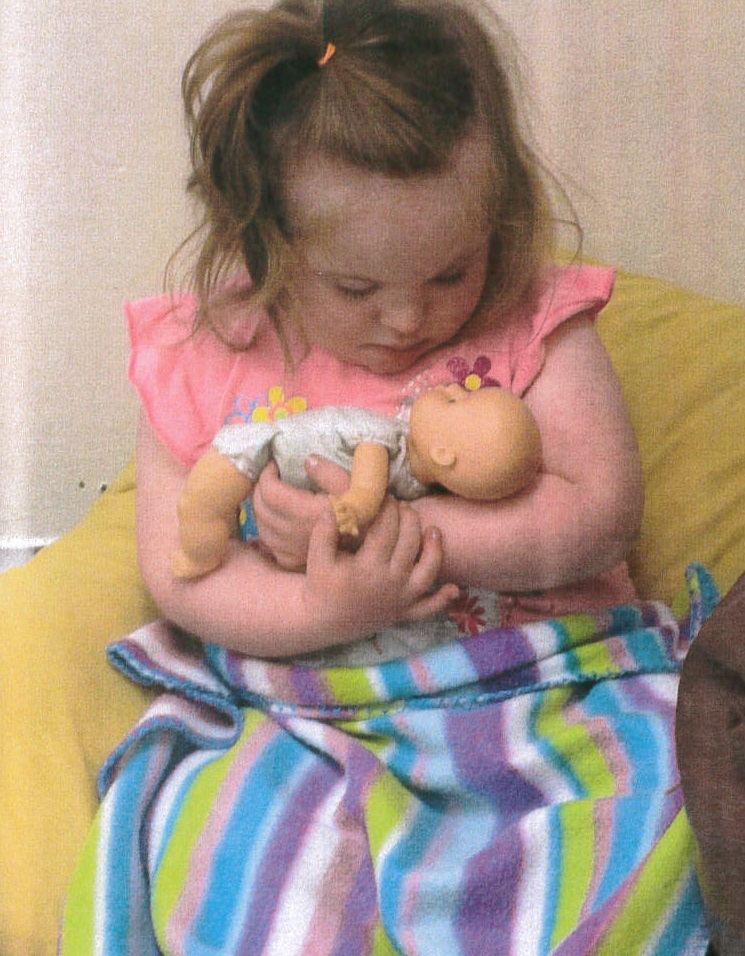

The Nova Scotia Early Learning Curriculum Framework is based on the concept of the Image of the Child which states that everyone’s personal Image of the Child is influenced by their own experiences, biases, and knowledge. The Framework sees children as curious, creative, full of potential, capable and confident. It values and honours children for who they are today. And for who they will become.
As part of the Nova Scotia Curriculum Framework, the staff at Wee Care Developmental Centre has gone through the process of identifying five traits in children that we find integral to their development. We believe that children innately have these abilities and it is our job to maximize and enhance these qualities.
The following are the five traits that we chose and the definitions we assigned to each one. At Wee Care Developmental Centre, the staff continually strives to find ways to encourage the development of each of these traits within our daily program and interactions with the children.
Inclusive: Willing and capable to learn diversity and inclusion. Open, ready and willing to include others. Understanding that there are different ways a person can accomplish this goal.
Resilient: The ability to persevere despite obstacles. We cannot always remove the obstacles but we can learn to work around them.
Brave: Acknowledging feelings (worry, anxiety, fear etc) and trying (a challenging task) anyways.
Empathetic: Understand, recognize, react and respond mindfully to the social, emotional and physical well-being of others.
Curious: The desire to investigate, wonder, learn, engage, and/or explore the world around us (and given the opportunity to do so).
The Reggio Emilia Approach
The Reggio Emilia Approach® is an educational philosophy based on the image of a child with strong potentialities for development and a subject with rights, who learns through the hundred languages belonging to all human beings, and grows in relations with others.
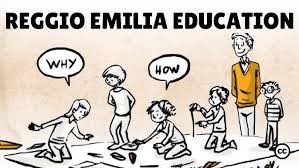
The Reggio Emilia Approach is founded on:
- collegial and relations-based work for all workers,
- the daily presence of a plurality of educators and teachers with children
- the atelier and person of atelierista
- in-school kitchens
- the environment as an educator
- documentation for making creative knowledge processes visible
- the pedagogical and educational practice co-ordinating group
- the participation of families
For more information on the Reggio Emilia Approach and the Image of the Child.

The child
is made of one hundred.
The child has
a hundred languages
a hundred hands
a hundred thoughts
a hundred ways of thinking
of playing, of speaking.
A hundred always a hundred
ways of listening
of marveling of loving
a hundred joys
for singing and understanding
a hundred worlds
to discover
a hundred worlds
to invent
a hundred worlds
to dream.
The child has
a hundred languages
(and a hundred hundred hundred more)
but they steal ninety-nine.
The school and the culture
separate the head from the body.
They tell the child:
to think without hands
to do without head
to listen and not to speak
to understand without joy
to love and to marvel
only at Easter and Christmas.
They tell the child:
to discover the world already there
and of the hundred
they steal ninety-nine.
They tell the child:
that work and play
reality and fantasy
science and imagination
sky and earth
reason and dream
are things
that do not belong together.
And thus they tell the child
that the hundred is not there.
The child says:
No way. The hundred is there.
Loris Malaguzzi (translated by Lella Gandini)